Mastering High-Speed PCB Design: Essential Techniques for 2026 Manufacturing Best Practices
Mastering High-Speed PCB Design: Essential Techniques for 2026 Manufacturing Best Practices table { border-collapse: collapse; width: 100%; margin: 20px 0; } th, td { border: 1px solid #ddd; padding: ...
Introduction
The demand for high-speed PCB design is increasing as technology advances and consumer expectations rise. By 2026, the integration of high-speed components in electronic devices will be crucial for meeting performance standards. This article explores the essential techniques for mastering high-speed PCB design, focusing on component specifications, datasheets, selection criteria, and application circuits. Understanding these aspects is vital for engineers and manufacturers aiming to enhance their processes and deliver cutting-edge products.
Technical Overview
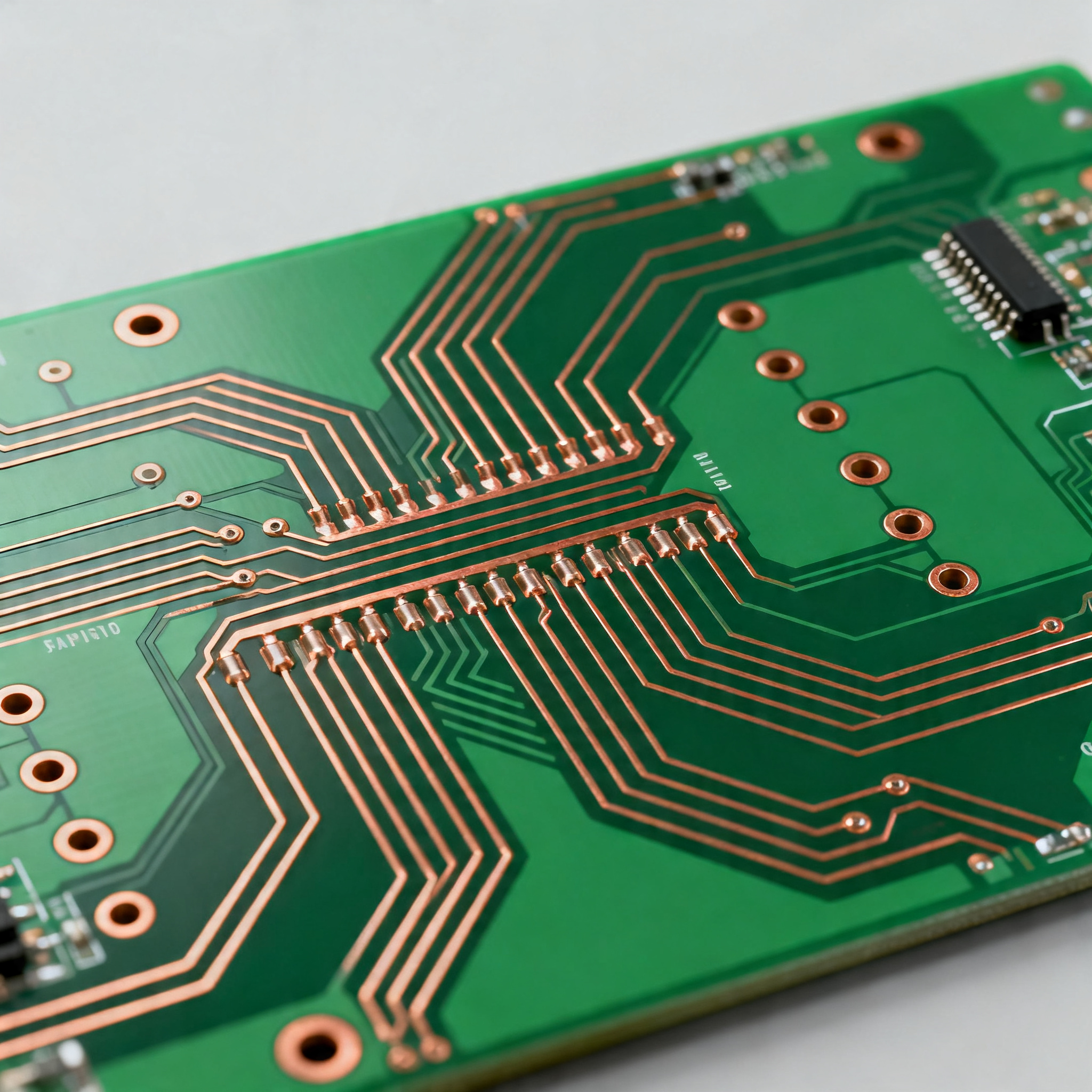
High-speed PCB design involves a comprehensive understanding of signal integrity, power distribution, and electromagnetic compatibility. The architecture of high-speed PCBs must accommodate rapid data transfer rates, typically exceeding 1 Gb/s, without compromising signal quality. Key principles include minimizing signal loss, managing impedance, and ensuring proper grounding. As the industry moves towards 2026, integrating these elements into design practices will be essential to meet the evolving requirements of applications such as telecommunications, automotive systems, and consumer electronics.
Detailed Specifications
Understanding component specifications is critical in high-speed PCB design. Specifications provide essential information about an IC chip's capabilities, including CPU speed, memory, peripherals, power requirements, and package type. These factors influence the overall performance of the PCB and its suitability for specific applications. Manufacturers often provide comprehensive datasheets detailing these specifications, which are invaluable resources for engineers during the design process.
| Specification | Details | Notes |
|---|---|---|
| CPU Speed | 2.5 GHz | High-performance computing tasks |
| Memory | 16 GB DDR4 | Supports multi-tasking |
| Peripherals | USB 3.1, HDMI 2.0 | Extensive connectivity |
| Power | 5V, 3A | Efficient power consumption |
| Package | BGA, 256 pins | Compact form factor |
| Operating Temperature | -40°C to 85°C | Industrial applications |
| Storage | 512 GB SSD | Fast read/write speeds |
| Graphics | Integrated GPU | Supports 4K displays |
| Networking | Gigabit Ethernet | Reliable network performance |
| Security | TPM 2.0 | Enhanced security features |
Key Takeaways from the Specifications
The core specifications table highlights the critical features of a high-speed IC chip, such as CPU speed and memory capacity. These elements are pivotal in determining the processing power and efficiency of a PCB. The choice of peripherals and package type can significantly influence the design's flexibility and size constraints. Notably, the operating temperature range indicates the chip's suitability for various environments, while security features like TPM 2.0 enhance data protection. Selecting components with these specifications ensures robust performance and reliability in demanding applications.
| Parameter | Value | Notes |
|---|---|---|
| Operating Voltage | 1.2V to 3.3V | Wide voltage range for flexibility |
| Max Current | 100 mA | Low power consumption |
| Input Leakage Current | 1 nA | Minimal leakage for efficiency |
| Output Drive Current | 20 mA | Suitable for various loads |
| Propagation Delay | 5 ns | Fast signal processing |
| Rise/Fall Time | 1 ns | Quick signal transitions |
| ESD Protection | ±2 kV | Enhanced durability |
| Input Capacitance | 5 pF | Low capacitance for speed |
| Output Capacitance | 10 pF | Maintains signal integrity |
| Power Dissipation | 0.5 W | Efficient thermal management |
| Clock Frequency | 1 GHz | Supports high-speed operations |
| Jitter | 50 ps | Stable signal performance |
Practical Implications
The electrical characteristics table details the operating conditions and performance parameters of the IC chip. Operating voltage and current specifications are crucial for power management, affecting the overall energy efficiency of the PCB. Parameters like propagation delay and rise/fall time are vital for ensuring fast signal processing, which is essential in high-speed applications. ESD protection and power dissipation ratings highlight the chip's durability and thermal performance, critical for maintaining reliability in various environments. Understanding these characteristics enables engineers to optimize PCB designs for performance and efficiency.
| Application | Configuration | Benefits |
|---|---|---|
| Telecommunications | Multi-core processor | High data throughput |
| Automotive Systems | Ruggedized design | Enhanced durability |
| Consumer Electronics | Compact form factor | Space efficiency |
| Industrial Automation | Wide temperature range | Reliable performance |
| Medical Devices | Low power consumption | Extended battery life |
| Networking Equipment | High-speed I/O | Improved connectivity |
| IoT Devices | Integrated security features | Data protection |
| Wearable Technology | Energy-efficient design | Longer usage time |
Application Guidelines
The application comparison table illustrates various use cases for high-speed IC chips, highlighting the benefits of different configurations. For instance, telecommunications applications benefit from multi-core processors that enable high data throughput, while automotive systems require ruggedized designs for enhanced durability. Consumer electronics prioritize compactness for space efficiency, whereas industrial automation demands reliability across wide temperature ranges. Understanding these configurations and their benefits helps engineers select the appropriate components for specific applications, ensuring optimal performance and functionality.
Design Considerations
Designing high-speed PCBs requires careful consideration of factors such as signal integrity, power distribution, and thermal management. Signal integrity is crucial for maintaining the quality of high-speed signals, which can be affected by factors like impedance mismatches and crosstalk. Proper power distribution ensures that all components receive adequate power without causing voltage drops or noise. Thermal management is essential for preventing overheating, which can degrade performance and reduce the lifespan of components. Implementing these considerations in the design process helps achieve reliable and efficient high-speed PCBs.
Step-by-Step Implementation
Implementing a high-speed PCB design involves several critical steps:
- Define the design requirements, including performance, size, and environmental conditions.
- Select appropriate components based on specifications and application needs.
- Design the schematic, ensuring proper signal flow and component placement.
- Perform signal integrity analysis to identify and mitigate potential issues.
- Create the PCB layout, focusing on minimizing trace lengths and maintaining controlled impedance.
- Validate the layout with design rule checks and simulations to ensure compliance with standards.
- Prototype the design using quick-turn PCB fabrication services for rapid testing and iteration.
- Test the prototype under real-world conditions to verify performance and reliability.
Following these steps ensures a systematic approach to high-speed PCB design, resulting in a robust and efficient final product.
Common Issues & Solutions
High-speed PCB designs can encounter several common issues:
- Signal Reflections: Mitigated by proper impedance matching and termination techniques.
- Crosstalk: Reduced by increasing trace spacing and using ground planes for shielding.
- Electromagnetic Interference (EMI): Minimized by implementing filtering and shielding strategies.
- Power Integrity Problems: Addressed by optimizing power distribution networks and decoupling capacitors.
- Thermal Management Challenges: Solved by using heatsinks, thermal vias, and proper airflow design.
Identifying and addressing these issues early in the design process is crucial for achieving reliable high-speed PCB performance.
Applications & Use Cases
High-speed PCBs are integral to various applications, including telecommunications, automotive systems, and consumer electronics. In telecommunications, they enable high data throughput for faster connectivity. Automotive systems benefit from their durability and reliability in harsh environments. Consumer electronics leverage their compact form factors for space-saving designs. Additionally, high-speed PCBs play a crucial role in industrial automation, medical devices, and networking equipment, where performance and reliability are paramount.
Selection & Sourcing Guide
When selecting components for high-speed PCB design, engineers should consider factors such as performance specifications, compatibility, and cost. Reliable sourcing is also essential to ensure the availability and quality of components. For comprehensive component selection and sourcing, visit IC Online.
FAQ
- Q: What are the key factors in high-speed PCB design?
A: Signal integrity, power distribution, and thermal management are crucial. - Q: How do I ensure signal integrity?
A: Use controlled impedance traces, proper grounding, and minimize trace lengths. - Q: What is the role of power distribution in PCB design?
A: It ensures components receive adequate power without noise or voltage drops. - Q: How can I manage thermal issues in PCBs?
A: Implement heatsinks, thermal vias, and optimize airflow design. - Q: What are common signal integrity issues?
A: Signal reflections, crosstalk, and EMI are common challenges. - Q: How do I select the right components?
A: Consider specifications, compatibility, and application requirements. - Q: What are quick-turn PCB services?
A: They provide fast fabrication and assembly for rapid prototyping. - Q: Why is prototyping important?
A: It allows testing and validation of PCB designs before mass production. - Q: How can I reduce EMI in my design?
A: Use filtering, shielding, and maintain proper trace spacing. - Q: What resources are available for PCB design?
A: IPC standards, PCBWay, and Nova PCBA offer valuable design and manufacturing insights.
Conclusion
Mastering high-speed PCB design is essential for engineers and manufacturers aiming to stay competitive in the evolving electronics industry. By understanding component specifications, electrical characteristics, and application configurations, engineers can design efficient and reliable PCBs. Implementing best practices in signal integrity, power distribution, and thermal management ensures robust performance. As technology advances, staying informed and leveraging resources like IPC standards and quick-turn PCB services will be crucial for success in 2026 and beyond.